
You spend thousands to acquire a client. Then you lose them. Whatever you bring in at the front end, you lose at the back end. Revenue plateaus. Growth stalls.
Most agency and service business owners I work with respond to churn by doing one of two things: locking clients into longer contracts or trying to deliver better results. Neither works the way they expect.
After growing and running three service businesses and advising 70+ clients on their operations, here’s the full picture of what actually drives retention — and where most businesses focus on the wrong thing.
The retention equation
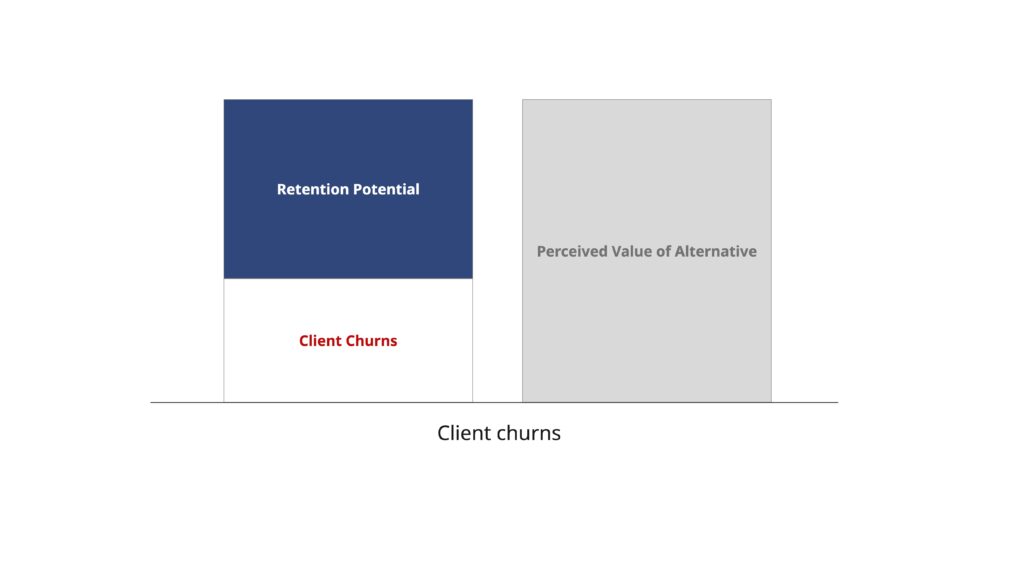
Your ability to keep a client comes down to one comparison. If your retention potential is higher than the perceived value of the alternatives — hiring another agency, taking the service in-house, or just cutting the spend — your client stays.
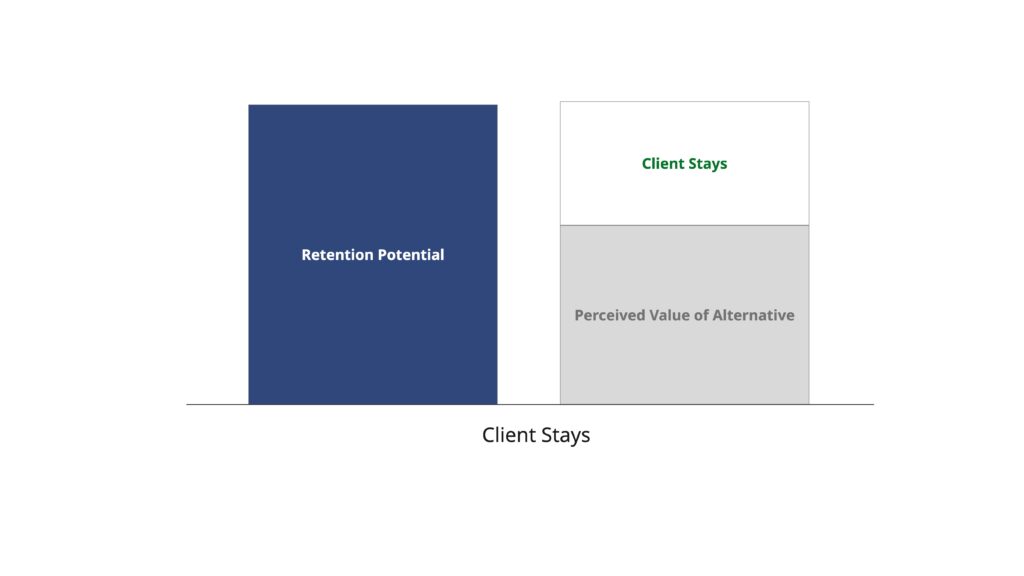
If it’s lower, they leave.
Retention potential has two components: client satisfaction and switching cost.
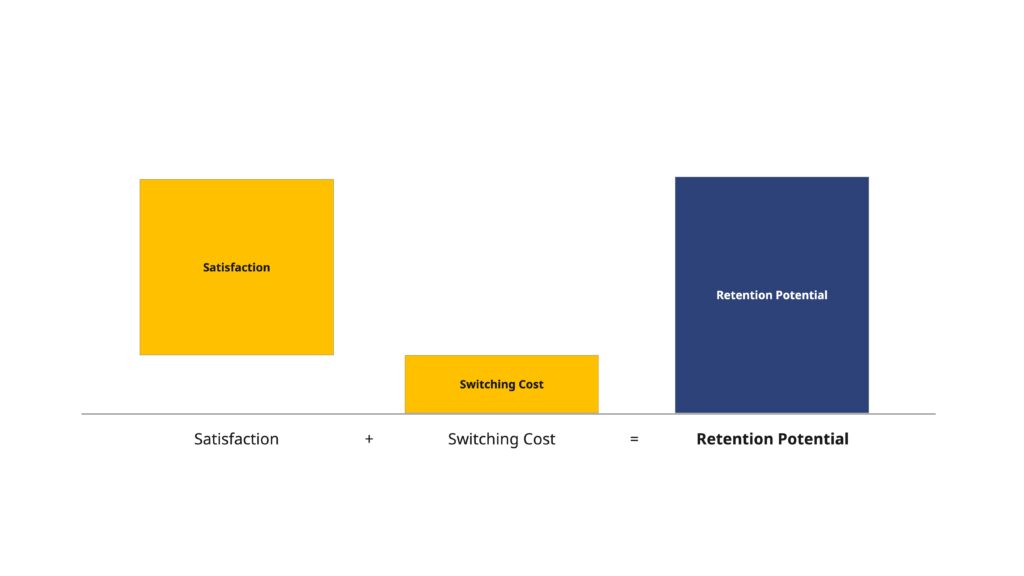
Most agencies over-invest in switching cost (longer contracts, proprietary systems) and under-invest in satisfaction. That’s backwards. Let me explain why.
Satisfaction: the real lever
Satisfaction is simple in theory:
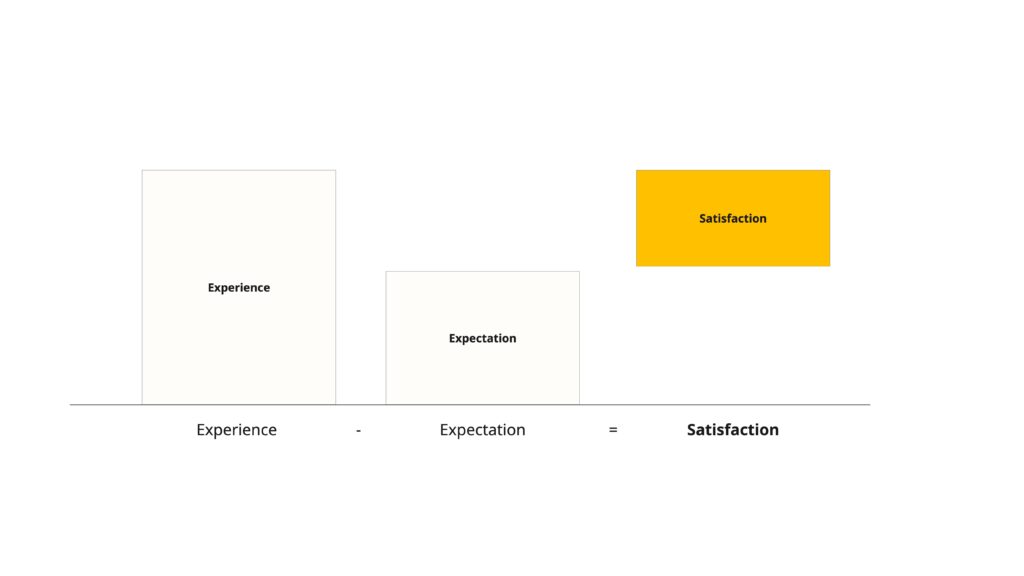
Experience minus Expectation equals Satisfaction.
If your client’s experience consistently exceeds what they expected, they’re satisfied. If it falls short, they’re not. The gap between the two — in either direction — is what determines whether they stay or start looking.
This means you have two sides to work with: improve the experience, or manage the expectation. Most businesses only focus on the first.
What makes up the experience
Experience has three components. Most service businesses focus on one and neglect the other two.
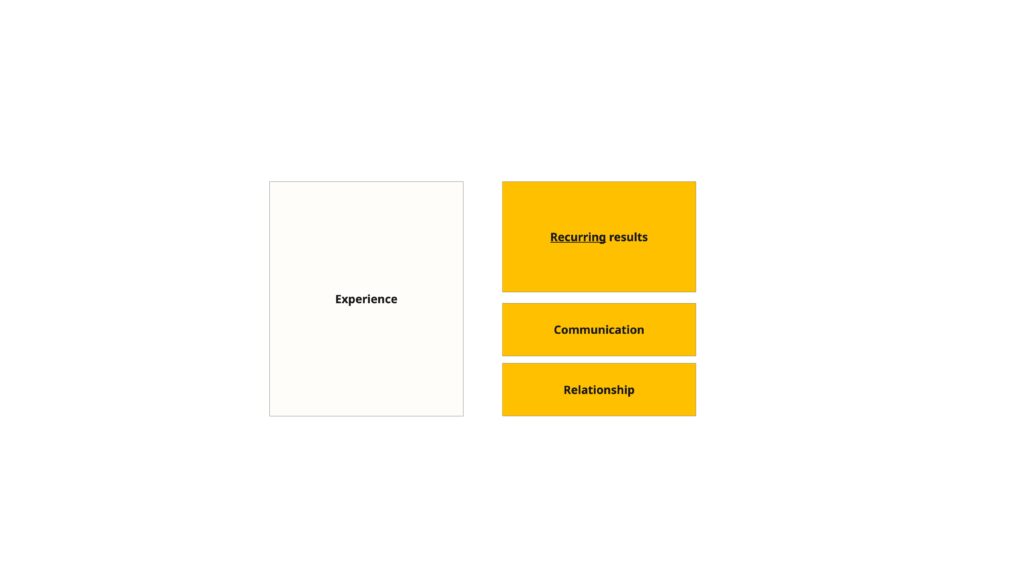
Recurring results.
This is where most of my clients put all their energy. And results matter — obviously. But the key word is recurring. A great first month doesn’t retain a client through month eight. You need to deliver strong results consistently, not just impressively at the start.
Communication.
This is the most underrated retention driver I see. Proactive communication — telling the client what’s happening before they ask, flagging problems before they discover them, celebrating wins before they forget to notice — builds enormous trust. When clients feel like your team catches everything they throw, they stop looking for alternatives.
Relationship.
Good results and good communication build relationships over time. But you have to create the conditions for that to happen. The most effective tool is simple: weekly client meetings. You can deliver a service asynchronously, but don’t give up the opportunity to meet regularly. A strong relationship can carry you through a temporary slump in results. Without it, one bad month triggers a review.
These three together — results, communication, relationship — create the experience. Miss any one of them and satisfaction drops, even if the other two are strong.
What shapes client expectation
Four things define what your client expects from you. If you don’t manage them deliberately, they’ll set themselves — usually too high.
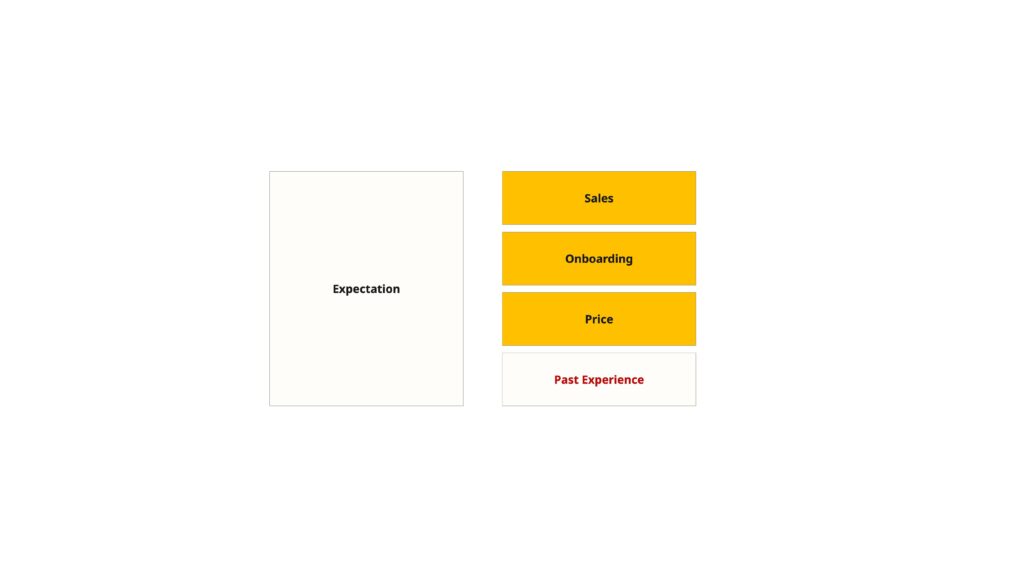
The sales process.
This is where most retention problems start. I’ve seen it over and over: sales promises a return on ad spend of 20, delivery produces 10. Ten might be excellent for the industry. The client is still disappointed because they were expecting 20. If sales had closed them at 5 and delivery produced 10, same result — happy client. What gets sold defines what gets expected.
Onboarding.
This is your window to set the tone. You have the client’s full attention, the contract is signed, and they’re ready to engage. Use it. Set the time horizon for results. Establish the communication cadence. Get them a quick early win. The expectations set during onboarding define the standard everything else gets measured against.
Price.
Higher price means higher expectations. That can work for you — premium pricing signals quality and attracts serious clients. But it also means your experience needs to match. Find the sweet spot where the client feels they’re paying real money for real value, and the results justify the investment.
Past experience.
This is the one most businesses forget. If you deliver exceptional service for a year and then drop the ball — communication slows, results dip — your client doesn’t compare you against competitors. They compare you against yourself. Your own track record raises the bar over time. Consistency isn’t just good delivery — it’s the expectation your past delivery created.
Switching cost: less leverage than you think
Switching cost is the other half of retention potential. Most agencies overweight it. There are two types.
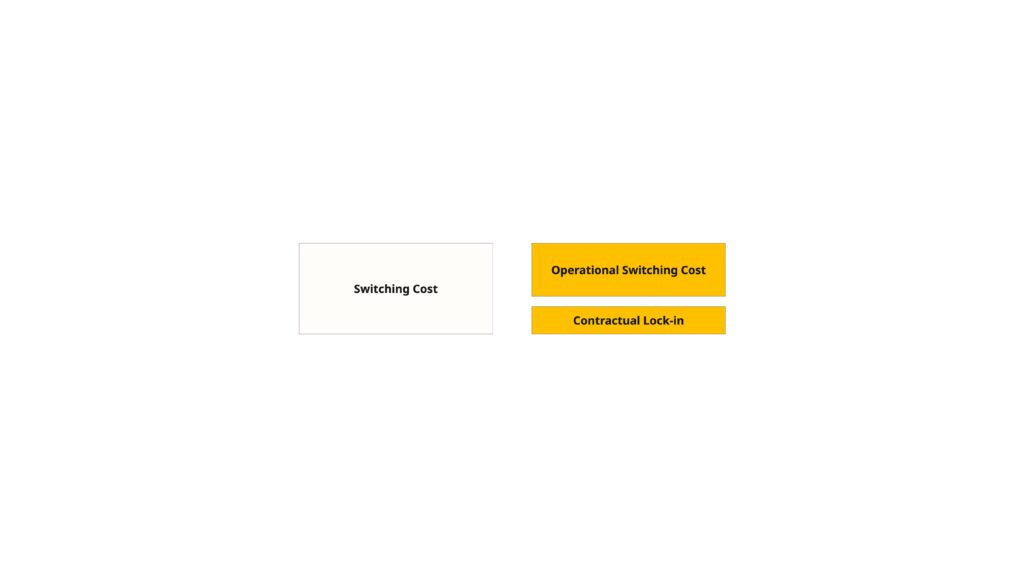
Contractual lock-in. This is the smallest lever you have. Don’t stress about three-month vs. twelve-month terms. A contract term should reflect what you reasonably need to deliver results — if SEO takes six months to show impact, a six-month initial term is fair. Beyond that, lock-in doesn’t create retention. It delays churn. I’ve seen clients cancel services they were perfectly satisfied with just to avoid the next lock-in period. That’s the opposite of what you want.
Operational switching cost. This is about how deeply embedded you are in your client’s systems, processes, and value chain. If you’re an integrated part of their delivery or revenue operations, switching is painful and expensive. But for most services, this switching cost is also relatively low. It’s a factor, not a strategy.
The bottom line: don’t build your retention strategy around making it hard to leave. Build it around making clients not want to.
Where to focus
If you’re dealing with high churn, run through this framework:
Start with expectations. Check what sales is promising and whether delivery can consistently exceed it. Fix the gap there first — it’s the fastest win.
Then look at communication and relationship. Most agencies under-invest here because results feel more important. They are important. But a client who trusts you, hears from you proactively, and likes working with your team will forgive a bad quarter. A client who only gets results and nothing else will leave the moment results dip.
Lock-in is the last place to look. If you need longer contracts to keep clients, the problem isn’t the contract length.